ON SALE NOW!
GIFT CLOSEOUTS
JUST ARRIVED
JUICE OF THE MONTH CLUBS
  3 & 6 Month
  6 & 12 Month
GRAPE JUICE -- WHITES
  Bacchus
  Brianna
  Catawba
  Cayuga
  Chancellor
  Chardonnay
  Delaware
  Diamond
  Edelweiss
  Gewürztraminer
  LaCrescent
  Malvasia
  Muscat
  Muscadine
  Niagara
  Pinot Blanc
  Pinot Gris
  Riesling
  Sémillon
  Seyval Blanc
  Thompson Seedless
  Trebbiano
GRAPE JUICE -- REDS
  Barbera
  Bluebell
  Cabernet Franc
  Cabernet Sauvignon
  Concord
  Isabella
  Lambrusco
  Mars
  Merlot
  Muscadine
  Pink Catawba
  Petite Verdot
  Pinot Noir
  Reliance
  Rougeon
  Syrah/Shiraz
  Steuben
  Valdepena/Tempranillo
  Vincent
  Zinfandel
APPLE CIDER
  Golden Delicious
  Granny Smith
  Haralson
  Honeycrisp
  Jonathan
  McIntosh
  Red Delicious
  Stayman
  Winesap
  York
  Others/Blends
ENGLISH APPLE JUICE
  Bramley
  Cox
  Russet
  Others/Blends
GOURMET FRUIT BLENDS
  Cranberry Blends
  Blood Orange Blends
  Cherry Blends
  Peach Blends
  Pear Blends
  Raspberry Blends
  Saskatoon Berry Blends
  Wildberry Blends
SHOP BY REGION
  Alabama
  Arkansas
  California
  Florida
  Georgia
  Iowa
  Massachusetts
  Michigan
  Minnesota
  Missouri
  New York
  North Carolina
  Ohio
  Oklahoma
  Oregon
  Virginia
  Washington
  Australia
  Canada
  France
  Germany
  Israel
  Italy
  New Zealand
  South Africa
  Spain
  United Kingdom
SHOP BY CATEGORY
  Sulphite-free
  Organics
  Kosher
  Sparkling
  Still
  Champagne-style Top
  Personal Size
GRAPE ESCAPE GIFTS
DOWN MEMORY LANE
|  | Home > Sweet Apple Cider, Non-Alcoholic
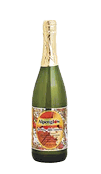
Sweet Apple Cider, Non-AlcoholicApple cider was a flourishing industry in Europe even before America was discovered. Today the Normandy and Brittany regions of France are famous for their apples. Early 17th century European settlers in the U.S. brought apple seeds with them and began planting orchards. The colonists used their apples to make cider, just as they had done in the Old World. Soon Colonial cider became important as both an agricultural commodity and as a means of exchange. (Wikipedia and Slow Food USA)
While hard apple cider is easy to find, premium non-alcoholic versions in festive bottling are elusive. We have stocked our shelves with some of the finest gourmet products available -- the web's largest single source for cider from the world's orchards. Browse your favorite apple variety for a cider that perfectly matches your taste buds.
Looking for a proper British apple juice? Click on the tab to your left and see how apple juice bottled in celebratory style is one of the newest beverages to land on America's shores!
|
 | Golden Delicious Some people think that Golden Delicious is simply the yellow cousin of the popular Red Delicious apple. But, in fact, they are related in name only. Golden Delicious began as a chance seedling, perhaps of Grimes Golden, on a farmer's hillside near Bomont, West Virginia. In 1914 Paul Stark of Stark Brothers Nursery reportedly bought the tree for five thousand dollars, and protected its investment with a tall cage, complete with burglar alarm. He found that special apple on a thousand-mile treasure hunt which started in the town of Louisiana, Missouri, the home of Stark Brothers, and ended in West Virginia. The apple, later to be called the Golden Delicious, has become the state's most famous contribution to horticulture and a standard in commercial and backyard orchards.

|  |  | Granny Smith The Granny Smith, or green apple, originated in Australia in 1868 from a chance seedling propagated by Maria Smith, where the name "Granny Smith" comes from. It was originally introduced to England in the 1930s and the United States in 1972. Granny Smith apples usually have a slightly more sour, sharp flavor than other apples. They are also favored for salads because the slices do not brown as quickly as other varieties.

|  |  | Haralson The Haralson is medium-sized and red in color. They are crisp and juicy, having a tart flavor. The Haralson apple was introduced by the Minnesota Horticulture Research Center in 1922. It is named after Charles Haralson, superintendent of the University of Minnesota Fruit Breeding Farm.

|  |  | Honeycrisp Honeycrisp apples were developed and released by the University of MN in 1991. Like MacIntosh, Honeycrisps do best when grown in the coldest areas of the country.

|  |  | Jonathan Woodstock, New York, is more famous for a historic rock concert than apples. However, the Jonathan apple is believed to have originated from an Esopus Spitzenburg seedling in 1826 from the farm of Philip Rick in Woodstock. Although it may have originally been called the "Rick apple," it was soon renamed by Judge Buel, President of Albany (NY) Horticultural Society, after Jonathan Hasbrouck, who discovered the apple and brought it to Buel's attention. The apple is medium-sized, sweet and full of acidity, with a tough but smooth skin.

|  |  | McIntosh The McIntosh is an apple cultivar with red and green skin, a tart flavor, and tender white flesh. It is traditionally the most popular cultivar in New England, well known for the pink sauce unpeeled McIntoshes make. Many consider it a superior eating apple and well suited for applesauce, cider, and pies. Every McIntosh apple has a direct lineage to a single tree discovered in 1811 by John McIntosh on his farm in Dundela, a hamlet located in Dundas County in the Canadian province of Ontario.

|  |  | Red Delicious The Red Delicious is the most widely grown apple in the world, red with darker red streaks, and five "points" on the bottom. Like many other cultivars, it was a chance seedling. The legend is that a hardy seedling was found in 1868 by one Jesse Hiatt, an apple grower outside East Peru, Iowa, USA. Hiatt tried to kill it, but it kept coming back, and finally Hiatt let it grow, eventually bringing its fruit to a fruit show in Louisiana, Missouri. It won first prize. The Red Delicious was originally called "Hawkeye" by Hiatt, but after taking it to the fruit show in Lousiana it was called simply "Delicious". When the Golden Delicious was discovered in 1914, the name changed again to "Red Delicious."
Red Delicious apples have more antioxidant activity than others, according to a Canadian study that appeared in the June 29, 2005, issue of the Journal of Agricultural and Food Chemistry. Antioxidants are believed to be able to neutralize the unstable compounds called free radicals, which can damage the cells and tissues leading ultimately to heart disease, prostate, colon, and other cancers.

|  |  | Stayman For those in the know, Stayman apples are a connoisseur's delight. Their distinctive sweeet-tart flavor, snappy bite, satisfying texture and crimson color have made them a favorite since their discovery by Dr. Stayman in 1866. The Stayman is an ideal, all-purpose apple. As a snack, it gets high praise for its robust taste and firm, crisp flesh.

|  |  | Winesap The Winesap apple is an old apple variety. It has been a favorite cider apple since the late 1800's because of its truly unusual flavor. The Winesap is still one of the leading strains being grown in the US. Juicy and tart, it has a sprightly, medium acid taste.

|  |  | York York was discovered near York, Pennsylvania, around 1830, and is still widely grown in south central Pennsylvania and southward along the Shenandoah Valley and Blue Ridge mountains. Apple fans know and love York for its intense tart/sweet flavor.

|  |  | |  |
|